 Her Second Pour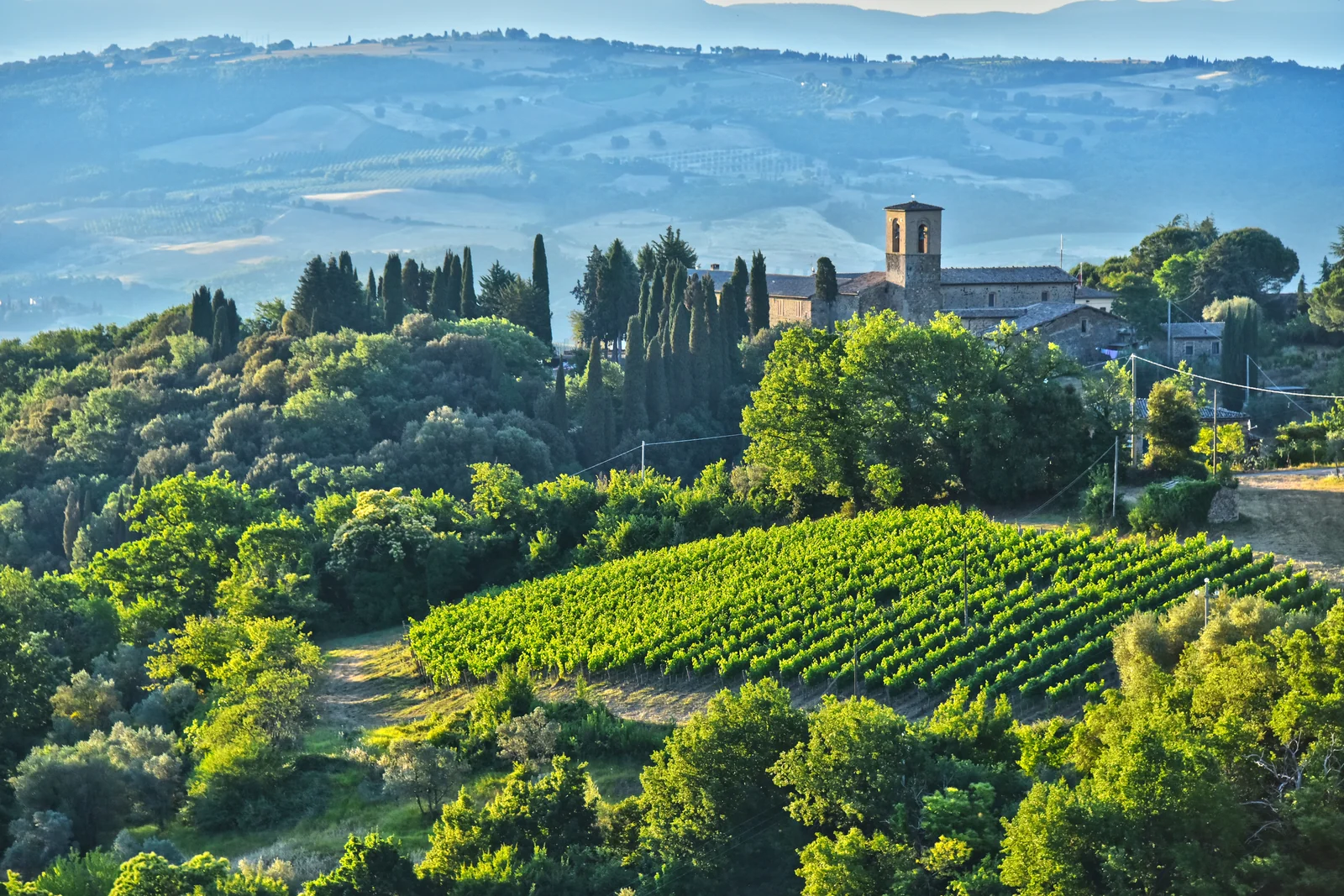
Wine Guide No. 001 · Italy
Italian Reds,
Decoded.
Six familiar names. Three regions.
A few delicious differences.
A little context for the next glass
It began with
a good Brunello.
This guide began with an affordable Brunello I enjoyed—and a conversation about what makes it different from Barolo, Barbaresco and the other Italian reds we see on a wine list.
Start with the grape, the place and the way the wine is made. The names become easier to remember, and choosing the next bottle becomes part of the pleasure.
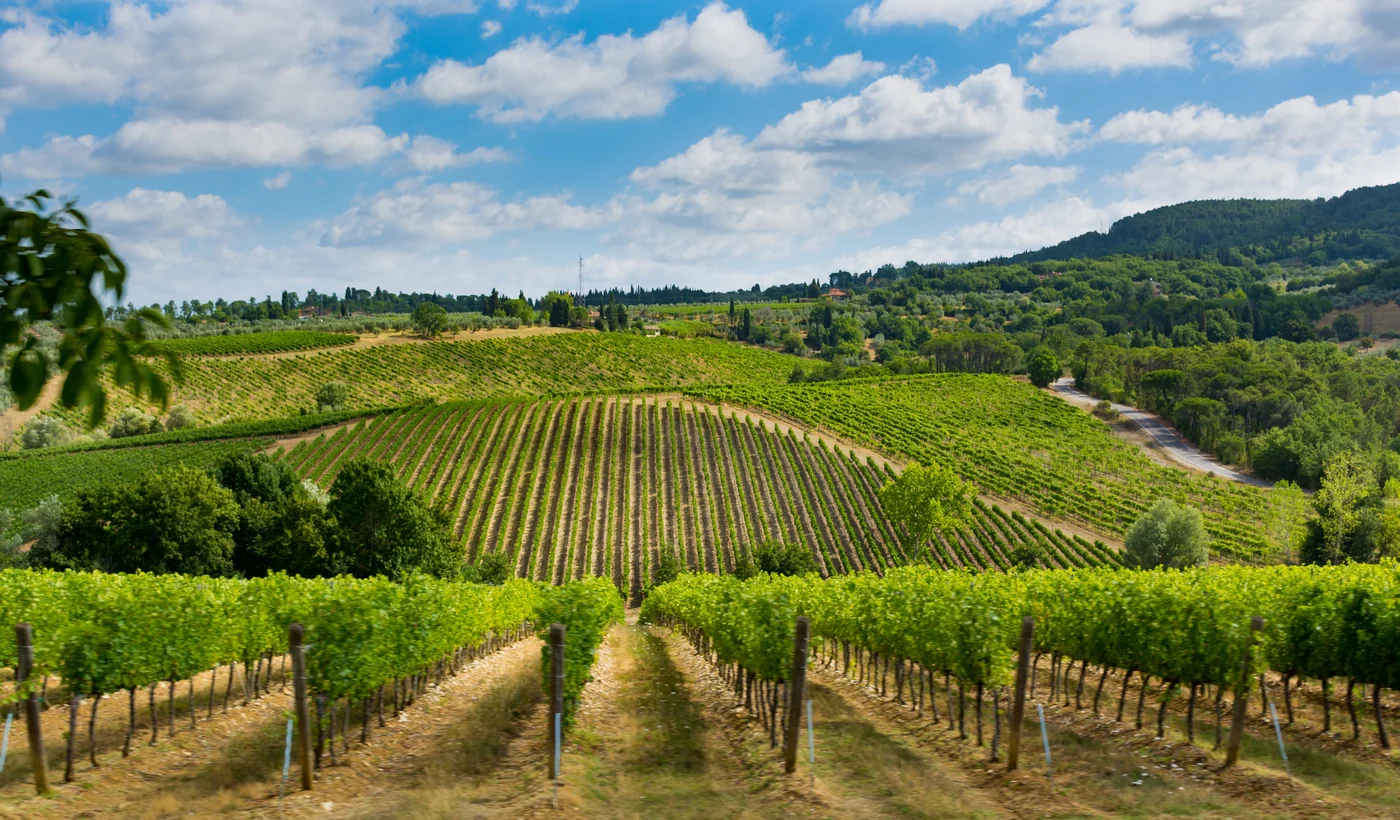
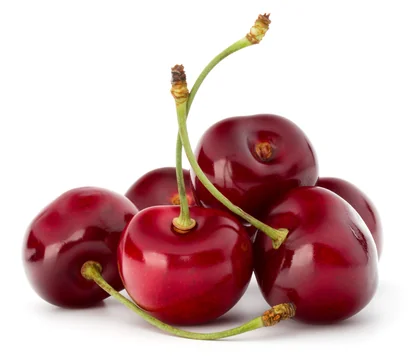
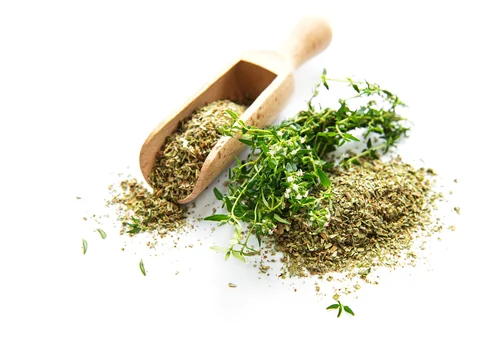
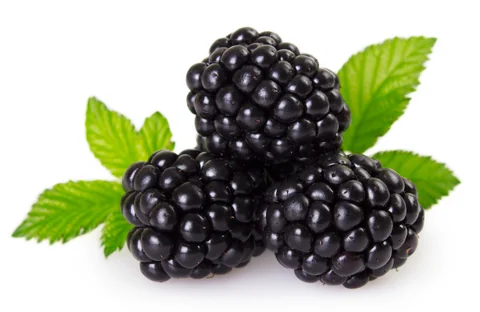
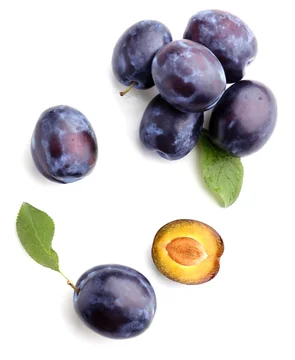
The fruit, flower and herb photos are aroma cues, not added ingredients. Fruit aromas can be vivid in a dry wine. Producer, vintage and bottle age shape what you notice.
01 / Central Italy
Tuscany
One place, different expressions.
Brunello di Montalcino
100% Sangiovese
- In the glass
- Full-bodied, with bright acidity and firm tannins. Look for cherry, herbs and, with age, leather.
- What sets it apart
- From Montalcino; at least 2 years in oak. Released in the 5th year after harvest.
- At the table
- Steak or mushroom ragù
Super Tuscans
Often Cabernet, Merlot and/or Sangiovese
- In the glass
- Many are rich and polished, with blackberry or plum notes. Body, tannins and aromas vary widely.
- What sets it apart
- An informal term, not an appellation. Often Toscana IGT; some carry a DOC, such as Bolgheri.
- At the table
- Grilled lamb or steak
The distinction to remember: Brunello is a defined place and a single grape. “Super Tuscan” describes a much broader family of wines.
02 / Northwest Italy
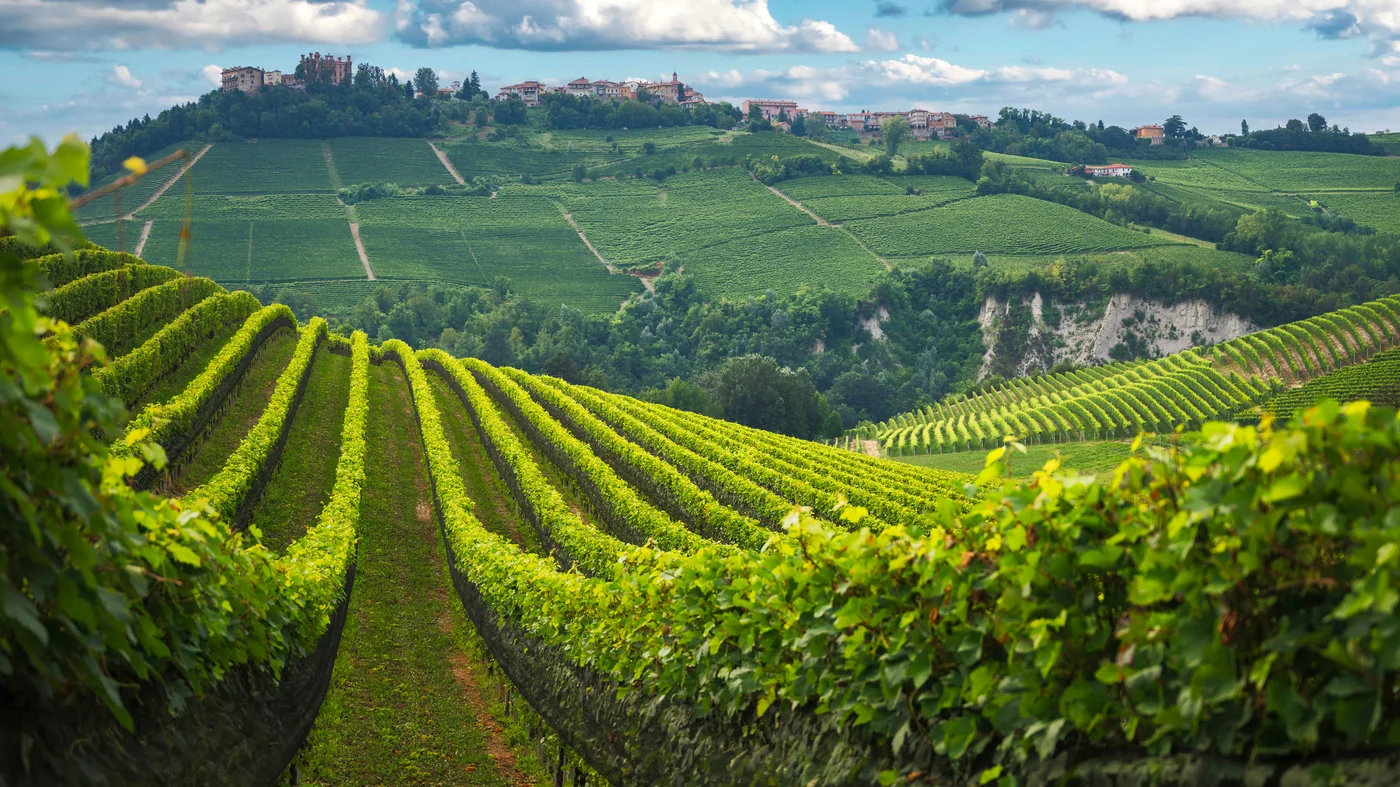
Piedmont
Two famous names. One grape.
Barolo
100% Nebbiolo
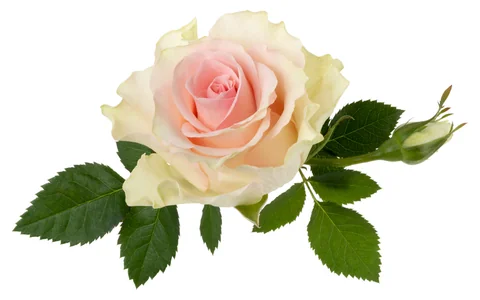
- In the glass
- Fragrant yet powerful: cherry and rose, with high acidity and firm tannins. Often needs time to soften.
- What sets it apart
- At least 38 months ageing, including 18 in wood. Pale colour can hide serious structure.
- At the table
- Braised beef or truffle pasta
Barbaresco
100% Nebbiolo
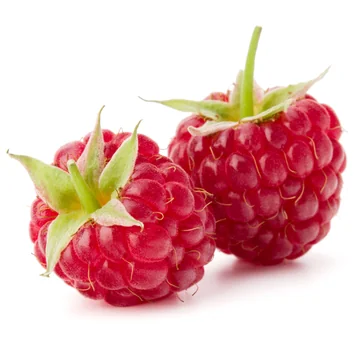
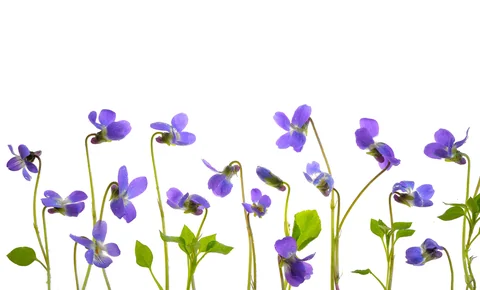
- In the glass
- Raspberry, violet and spice. High acidity and tannins; often more approachable young than Barolo.
- What sets it apart
- Same grape, a different growing area. At least 26 months ageing, including 9 in wood.
- At the table
- Duck or mushroom risotto
The distinction to remember: Both are Nebbiolo. Growing area and ageing requirements differ; Barbaresco is often approachable sooner, though producer and vintage matter.
03 / Northeast Italy
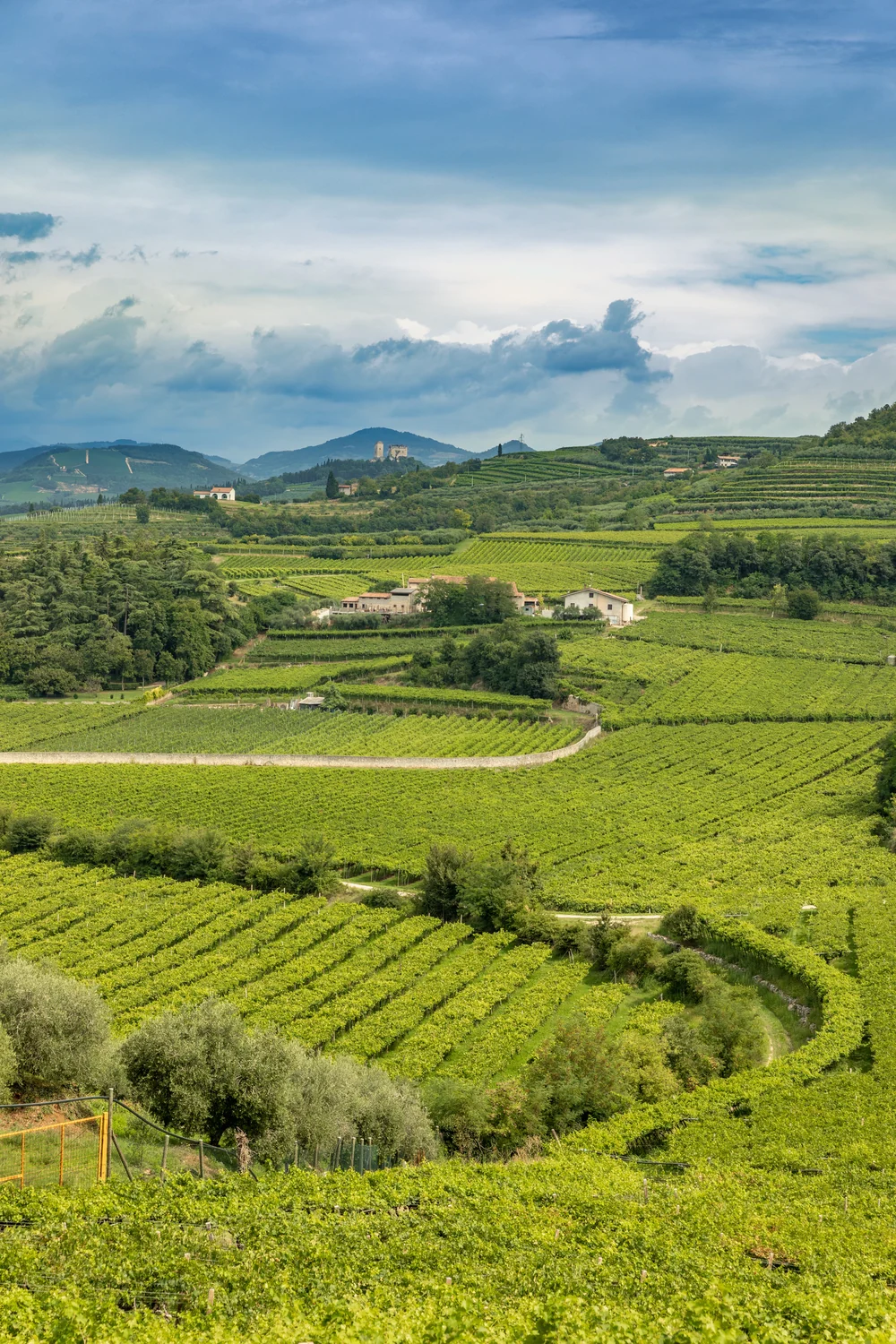
Veneto
The method makes the difference.
Valpolicella Ripasso
Corvina / Corvinone / Rondinella blend*
- In the glass
- Ripe cherry, plum and spice. Medium to full-bodied, with a rounded, generous feel.
- What sets it apart
- Valpolicella wine is refermented on Amarone and/or Recioto grape skins, adding richness.
- At the table
- Lasagna or roast pork
Amarone della Valpolicella
Corvina / Corvinone / Rondinella blend*
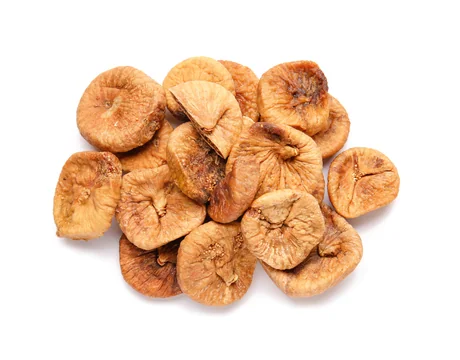
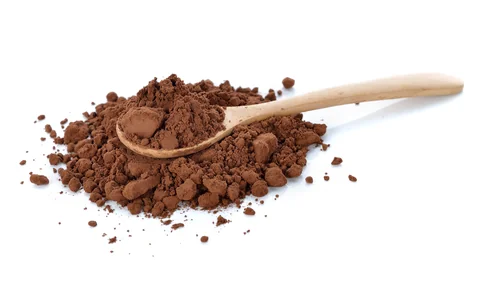
- In the glass
- Dried fruit, fig and cocoa. Full-bodied, concentrated and typically higher in alcohol; a dry style.
- What sets it apart
- Made from grapes dried before fermentation (appassimento), concentrating the fruit.
- At the table
- Short ribs or aged cheese
The distinction to remember: Ripasso gains richness through a second fermentation on grape skins. Amarone starts with grapes that have been dried before fermentation.
* Corvina and/or Corvinone, Rondinella and other permitted grapes. Typical styles vary. Ageing shown throughout this guide is for standard bottlings; Riserva rules differ.
Reading the label
A few letters.
A little more context.
DOC, DOCG and IGT tell you about origin and production rules. They are not a ranking of what you will enjoy most.
DOC
Denominazione di Origine Controllata
Controlled origin. A defined place, permitted grapes and production rules, with testing of the wine.
DOCG
Denominazione di Origine Controllata e Garantita
Controlled and guaranteed origin. A higher Italian classification, generally with tighter rules and a numbered state seal.
IGT
Indicazione Geografica Tipica
A geographical designation with more flexibility. It includes many Super Tuscans and can appear on exceptional wines.
For your next pour
Keep the guide
close at hand.
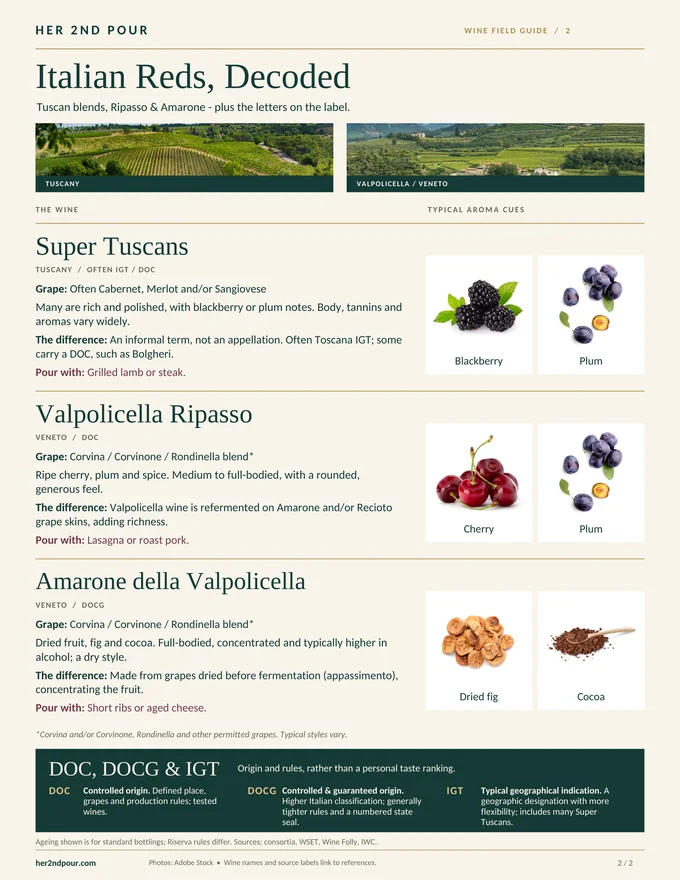
The two-page illustrated companion brings the wine profiles, aroma cues and label key together in a format you can save or print.
Download the guide PDF · 2 pages · 19 MB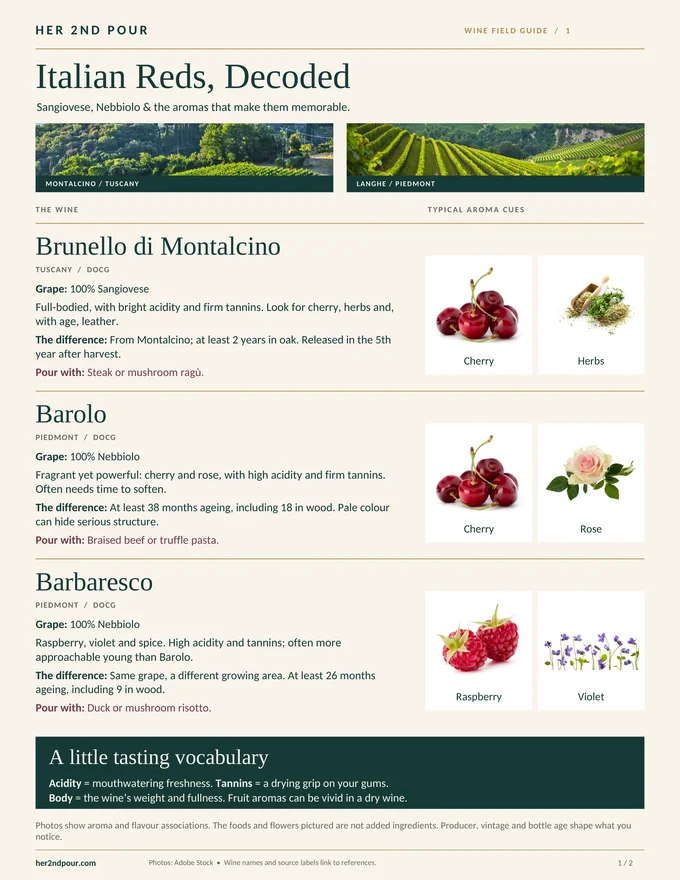
Sources & further reading
These are typical styles, not promises about an individual bottle. Explore the regional wine organisations and tasting resources behind this guide.
Regional and aroma photography: Adobe Stock. Guide and words: Her Second Pour.